Roofing
How To Choose Roof Color For Red Brick House (2026)
Choosing the wrong roof color for a red brick home is a costly mistake that stares back at you every day. The right pairing creates a cohesive, grounded exterior that holds its value over time. The wrong one makes a beautiful brick facade look off-balance or dated. Understanding how to choose roof color for red brick house exterior comes down to a handful of clear principles around color theory, brick undertones, and material selection. If you are already planning a replacement, knowing how residential roofing and color selection work together helps you make a decision that performs well both visually and structurally.
Here’s what we’ll cover:
- Why brick undertones determine everything about color choice
- The best roof colors for red brick homes in 2026
- How material type affects color options
- Colors to avoid on red brick exteriors
- Frequently asked questions about roof color for brick homes
- How Caesar’s Roofing can help you choose and install
Why Brick Undertones Come First
Before selecting a single shingle sample, the most important step is identifying the undertone of your specific brick. Red brick is not one color. It ranges from warm orange-reds with brown undertones to cooler blue-reds with a more purplish cast, and the undertone determines which roof colors will look intentional versus awkward.
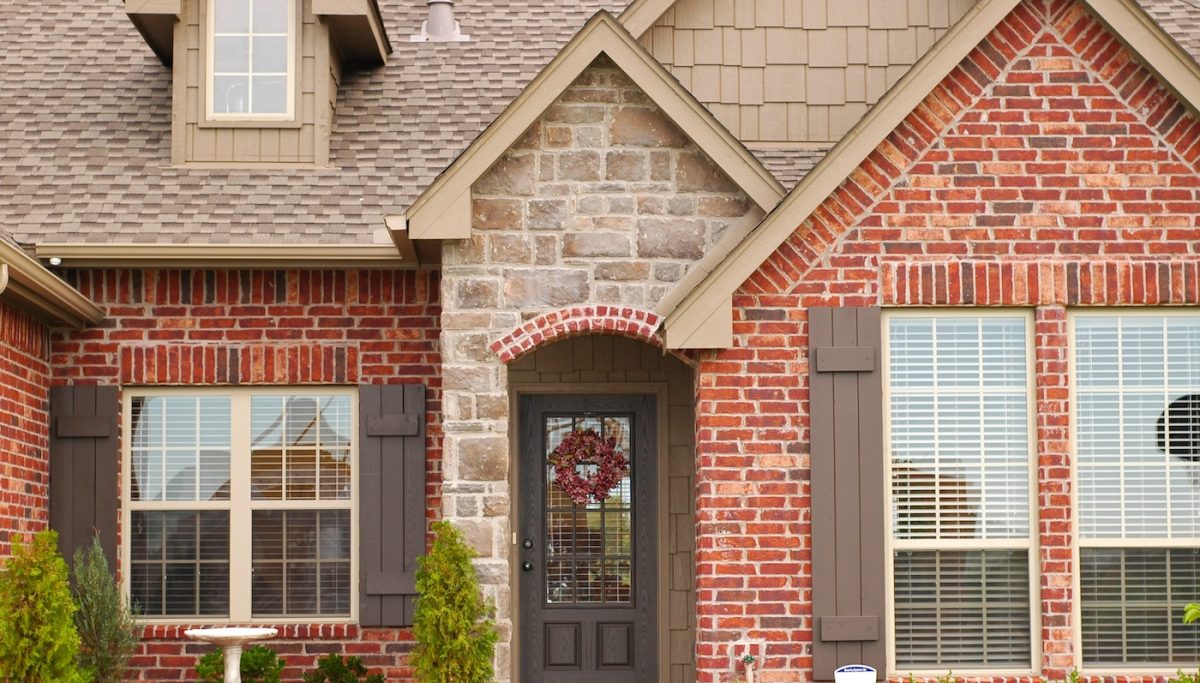
Hold a white sheet of paper next to your brick in natural daylight. If the brick looks orange or warm beside the white, you have a warm-undertone brick and should lean toward roof colors with similar warmth. If the brick looks cooler or more brown, you have more flexibility to go toward blue-grays and slate tones that cool-undertone bricks support well.
We’re proud to serve home and business owners in Salisbury, MA, and nearby communities with residential roofing services and more.
How Trim and Shutter Color Factor In
Roof color does not operate in isolation. The trim color, shutter color, and front door all form part of the same visual system, and the roof needs to work with all of them, not just the brick. White trim is the most common pairing with red brick and is compatible with nearly every roof color covered in this guide. Black shutters add contrast and tend to work best when the roof is also a darker tone. If your trim is a warm cream or tan, warmer roof tones in the brown or weathered wood range tend to tie the exterior together more cohesively than cool grays.
5 Best Roof Colors for Red Brick Homes
These are the options that consistently perform well on red brick exteriors across different brick tones, architectural styles, and regional contexts.
1. Charcoal and Dark Gray
Charcoal is the most versatile choice for a red brick home and the option that works across the widest range of brick undertones. The high contrast between dark gray and red brick creates a crisp, grounded appearance that reads as intentional and well-designed from the street. Charcoal shingles are widely available in both architectural asphalt and metal profiles, and they age well without fading into colors that clash with brick.
- Undertone compatibility: Charcoal leans neutral with subtle cool undertones, making it compatible with both warm orange-red brick and cooler brownish-red brick without requiring an exact match.
- Material availability: Nearly every shingle manufacturer offers charcoal or dark gray as a standard color in their architectural asphalt lines, and it is one of the most commonly stocked colors for metal standing seam systems as well.
- Longevity of appeal: Dark gray does not follow color trends the way warmer or more distinctive roof colors can. It is a conservative choice that holds its visual appeal over the full lifespan of the roof.
2. Slate Gray and Blue-Gray
For brick with cooler or more brown undertones, blue-gray and slate tones offer a more nuanced pairing than straight charcoal. These tones echo the natural color variation often present in older New England brick, particularly in homes built in the early to mid-twentieth century that used more varied brick blends.
- Regional fit: On the North Shore, where Colonial, Federal, and Cape Cod styles with red brick accents are common, slate gray reads as historically appropriate and architecturally coherent.
- Shutter coordination: Blue-gray roofs pair particularly well with navy, slate blue, or black shutters, and the combination is one of the most photographed exterior color palettes for brick homes in the Northeast.
- Lighter application: A medium slate gray rather than a very dark version keeps the exterior from feeling heavy on smaller homes where the brick already provides significant visual weight.
3. Sand, Tan, and Weathered Wood
For homeowners who want to avoid contrast and create a warmer, more unified exterior, sand and tan roof tones complement the brown undertones in most red brick without fighting for visual attention. This pairing works particularly well on homes with warm-toned mortar, tan trim, or wood accents elsewhere on the exterior.
- Warm brick compatibility: Orange-red bricks with visible warm undertones find their closest complement in sandy tan shingles that echo the warmth of the mortar rather than contrasting against the brick.
- Cottage and craftsman styles: This palette is especially effective on bungalow and craftsman-style homes where the goal is a relaxed, organic exterior rather than a high-contrast traditional look.
- Architectural shingle texture: In sand and tan tones, dimensional architectural shingles with varied granule blends tend to look more sophisticated than flat solid colors, because the texture adds visual interest that compensates for the reduced contrast.
4. Black
Black roofing is a bold choice on red brick that works best on larger homes where the roof represents a smaller proportion of the total visible exterior. The pairing creates strong contrast and a contemporary edge that reads as intentional on the right architectural style.
- Scale consideration: On a modest Cape Cod or ranch, a black roof can feel visually heavy because it dominates the elevation. On a two-story Colonial or Georgian where brick fills most of the facade, black provides a clean cap that frames rather than overwhelms.
- Heat absorption: In Massachusetts, black roofing absorbs more solar heat than lighter alternatives, which increases attic temperatures in summer and can marginally affect energy costs. Pairing a black roof with a well-ventilated attic and high-quality underlayment minimizes this effect.
- Metal roofing advantage: A matte black standing seam metal roof on red brick is one of the most striking residential exterior combinations available and handles the scale issue better than asphalt shingles because the clean lines of standing seam panels add architectural interest without visual bulk.
5. Weathered Green and Aged Copper
For homeowners seeking something distinctive, deep weathered greens and aged copper tones offer a nature-inspired complement to red brick that feels rooted and sophisticated rather than trendy. These tones work by referencing the patina of aged materials found on historic New England buildings, where copper gutters and copper-clad details have long been part of the vernacular.
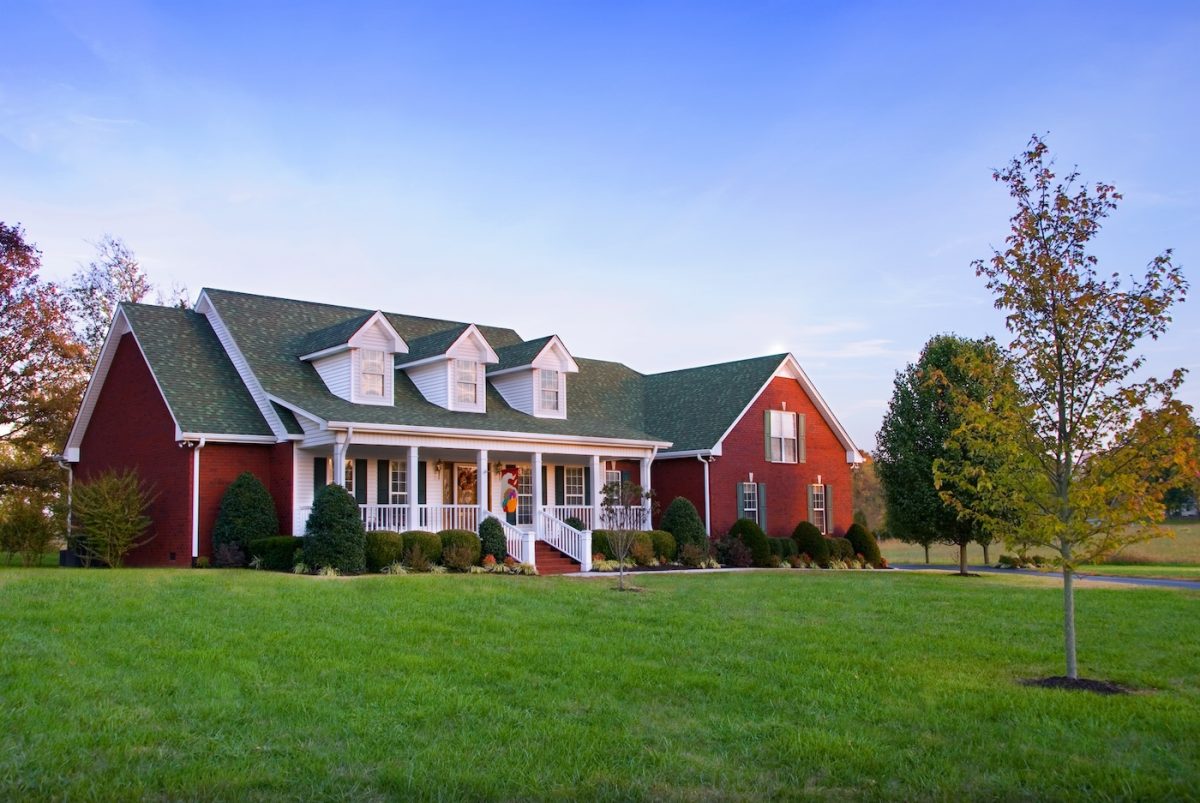
- Historic appropriateness: In neighborhoods with Colonial Revival, Georgian, or Federal-style homes, a weathered green roof references a genuine historical precedent rather than following a contemporary trend.
- Copper roofing: Actual copper roofing develops a patina over time that shifts from bright copper to a blue-green verdigris. On red brick, this aging process creates a combination that improves over time rather than fading into visual irrelevance.
- Composite and metal options: For homeowners who want the look without the cost of copper, metal roofing systems with aged copper or hunter green powder coat finishes achieve a similar effect at a fraction of the price and without the maintenance complexity of actual copper.
Colors to Avoid on Red Brick
Not every color that appeals in isolation works against red brick. A few combinations consistently underperform regardless of the specific brick tone.
| Color to Avoid | Why It Does Not Work | Better Alternative |
| Bright red or terracotta | Creates visual confusion with the brick rather than contrast | Charcoal or sand |
| Pure white or very light gray | Washes out the brick and makes the roofline invisible | Medium slate gray |
| Olive green or yellow-green | Clashes with the warm red tones in most brick | Hunter green or weathered green |
| Orange or rust | Too close to the brick color, creates a muddy overall appearance | Charcoal or tan |
| Very light blue | Creates a jarring visual clash with warm-undertone brick | Blue-gray or slate |
How Material Type Affects Color Selection
The roofing material you choose affects which colors are available and how those colors perform over time. Architectural asphalt shingles offer the widest range of color options and the most straightforward path to any of the palettes described above. They are available in blended granule colors that add dimension and texture, which typically look more sophisticated on a brick home than flat solid colors.
Metal roofing in standing seam or metal shingle profiles is available in a narrower but increasingly wide color range through powder coat finishes. Metal holds color better over time than asphalt, meaning a charcoal metal roof installed today will look nearly the same in twenty-five years. For red brick homes on the North Shore where salt air and freeze-thaw cycles accelerate asphalt aging, metal is increasingly worth the premium.
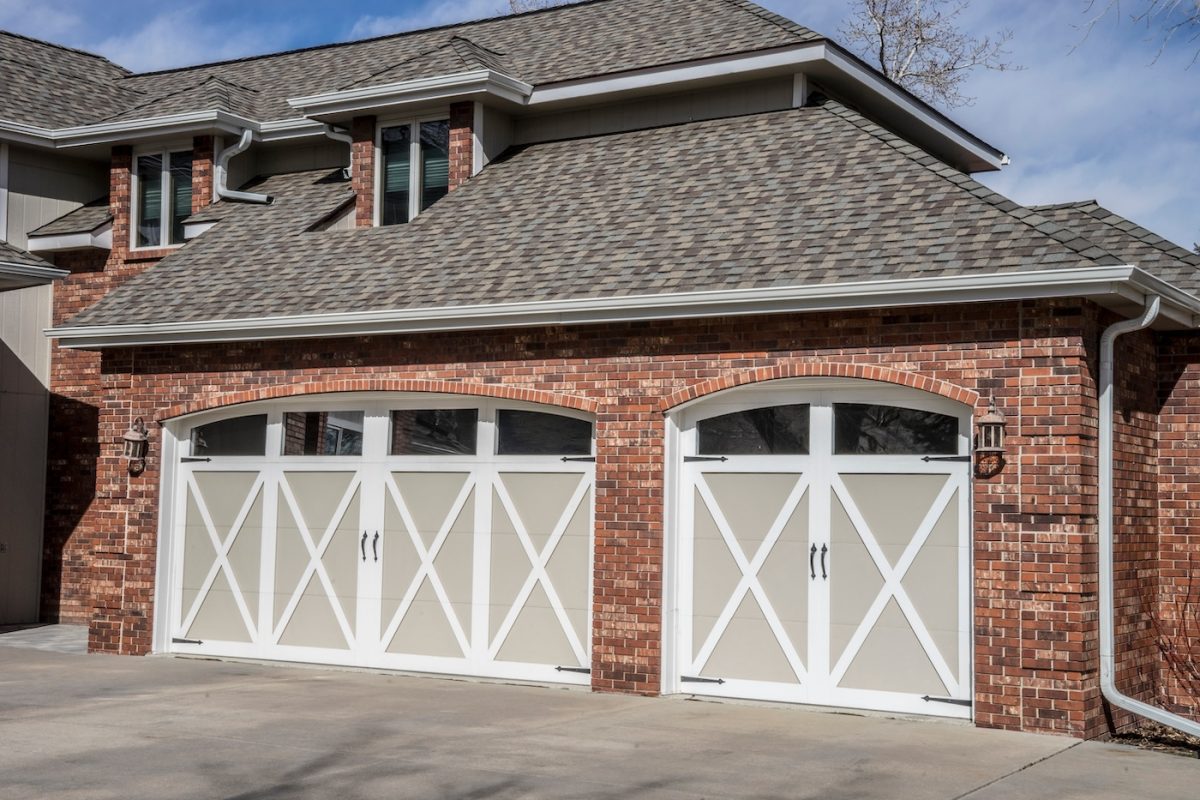
Slate and composite slate offer a natural stone appearance that pairs beautifully with red brick. Natural slate is available in gray, blue-gray, green, and purple tones, all of which have historical precedent on brick homes in New England. Composite slate achieves similar aesthetics at lower weight and cost.
Common FAQs About Roof Color for Red Brick Homes
Homeowners replacing roofs on brick homes tend to ask a consistent set of questions before committing to a color. Here are direct answers to what comes up most often.
Is there a tool I can use to visualize roof colors before deciding?
Yes. Most major shingle manufacturers including GAF, CertainTeed, and Owens Corning offer online visualizer tools that allow you to upload a photo of your home and apply different shingle colors to see how they look. These tools are imperfect but useful for eliminating obvious mismatches before requesting physical samples. Viewing physical samples in natural daylight at your home is always the final step before committing.
Does the color of the mortar affect which roof color to choose?
Yes, and it is often overlooked. Mortar color can shift the overall perceived tone of a brick facade significantly. Gray mortar with red brick reads cooler overall, supporting blue-gray and slate roof tones. Tan or buff mortar with red brick reads warmer, supporting sand, charcoal, and weathered wood tones. When the mortar is a strong contrasting color, it becomes part of the visual pattern and should factor into any color decision alongside the brick itself.
Will a dark roof make my home look smaller?
It can on smaller homes where the roof occupies a large portion of the visible facade from the street. The general principle is that higher contrast rooflines draw more visual attention and can make the roof feel dominant. On a single-story home with a steep pitch that shows a lot of roof surface, a medium gray or sand tone will feel less heavy than charcoal or black. On a two-story home where the brick dominates the elevation, a darker roof provides a grounding cap without overwhelming the facade.
How long should I expect asphalt shingles to last on a red brick home in Massachusetts?
The roofing material’s lifespan is independent of the color or the exterior material it is paired with. Architectural asphalt shingles in Massachusetts typically last 20 to 30 years depending on installation quality, ventilation, and exposure. Coastal locations on the North Shore may see slightly shorter lifespans due to salt air and storm frequency. Proper attic ventilation and a quality underlayment system extend shingle life regardless of color choice.
Caesar’s Roofing: Color Guidance and Expert Installation
Choosing the right roof color for a red brick home is a decision that lasts decades. Caesar’s Roofing has been helping homeowners across the North Shore and Greater Boston make this call for over 50 years. When we inspect a property and discuss a replacement, we walk through material options, color samples, and how each choice will interact with your specific brick tone, trim, and architectural style.
Schedule your free inspection today and get the expert guidance and quality installation your home deserves.