Roofing
Ridge Vents (6 Tips To Better Airflow For Your Roof 2026)
Most homeowners think about roofing in terms of shingles and leaks. The ventilation system underneath rarely gets attention until something goes wrong — and by then, the damage to the attic, the sheathing, and the energy bill has already been building for years. Ridge vents are the most effective passive ventilation component available for a residential roof, and understanding how they work and how to get the most from them makes a real difference in how your roof performs over time. If you are not sure whether your current system is working the way it should, understanding how attic ventilation and residential roofing work together is the right place to start.
Here’s what we’ll cover:
- What ridge vents are and how they work
- Why proper attic ventilation matters
- 6 tips to improve airflow through your ridge vent system
- How ridge vents compare to other vent types
- Frequently asked questions about ridge vents
- How Caesar’s Roofing can help
What Ridge Vents Are and How They Work

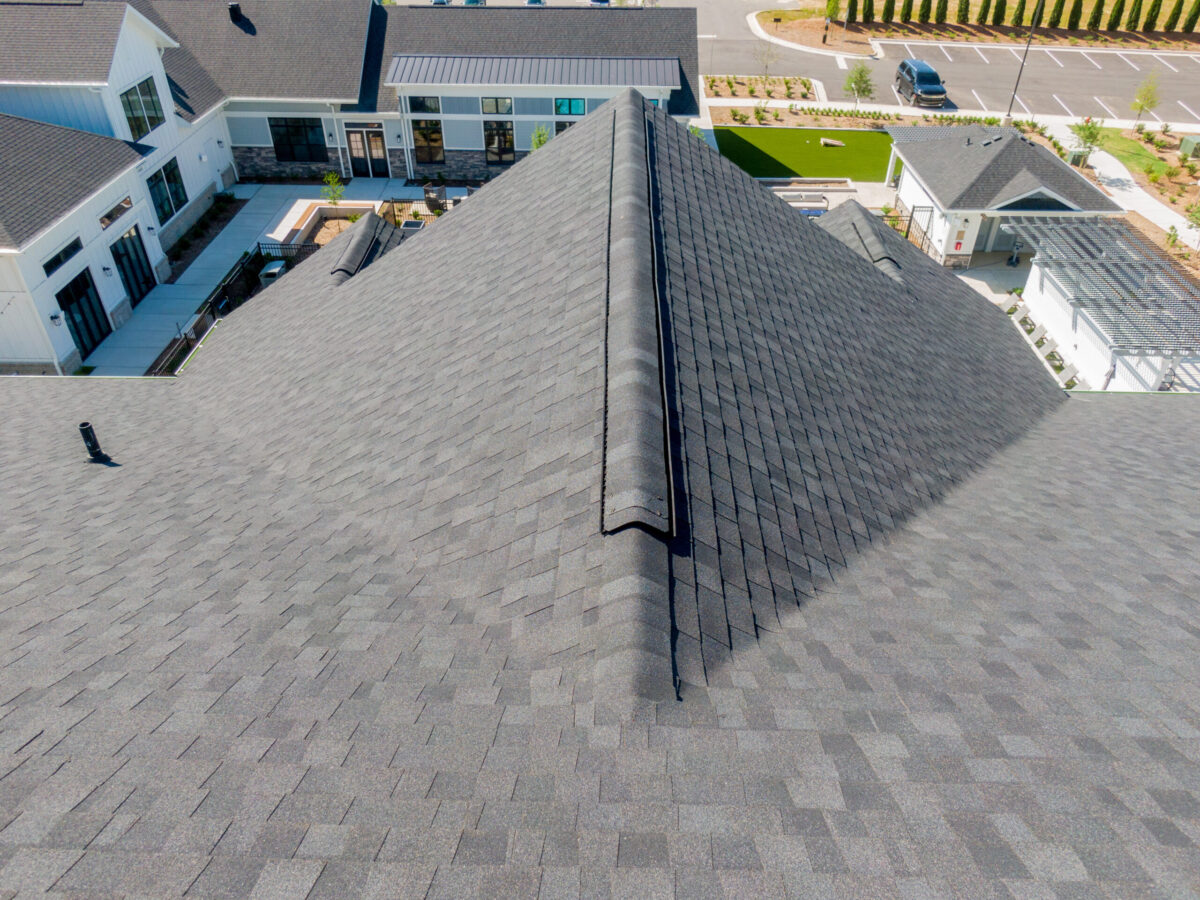
A ridge vent is a continuous venting channel installed along the peak of a sloped roof. Unlike individual box vents or gable vents placed at intervals, a ridge vent spans the full length of the roof ridge, creating a uniform exhaust pathway that allows warm air and moisture to exit the attic space along the entire roofline rather than at isolated points.
The system works on basic physics. Hot air rises and accumulates near the peak of the attic space. A ridge vent gives that hot air a place to escape, while intake vents at the soffit and eaves pull in cooler replacement air from below. When the intake and exhaust are properly balanced, this creates a continuous passive airflow through the attic that operates year-round without fans, electricity, or mechanical components.
According to the National Roofing Contractors Association, for a balanced ventilation system to function properly, about 50 percent of the ventilation area must be at or near the ridge, with the remaining 50 percent at the eaves. A system that is heavily weighted toward soffit intake with insufficient ridge exhaust will not move air effectively, leaving heat and moisture trapped in the attic regardless of total vent area.
We’re proud to serve home and business owners in Rockport, MA, and nearby communities with residential roofing, attic ventilation assessments, and more.
Ridge Vents vs. Other Vent Types
Not all ventilation approaches deliver the same performance. The table below compares ridge vents against the most common alternatives on the residential market.
| Vent Type | Coverage | Passive or Active | Best For | Limitations |
| Ridge vent | Full roofline | Passive | Balanced whole-attic ventilation | Requires paired soffit vents |
| Box vent (static) | Spot locations | Passive | Supplementing existing systems | Uneven coverage |
| Gable vent | End walls only | Passive | Simple rectangular attics | Cross-ventilation, not stack effect |
| Power attic vent | Spot locations | Active | Heavily heat-loaded attics | Energy cost, can depressurize attic |
| Solar attic fan | Spot locations | Active (solar) | Reducing peak heat loads | Limited output on cloudy days |
| Turbine vent | Spot locations | Wind-powered | Areas with consistent wind | Inconsistent performance |
Ridge vents consistently outperform spot ventilation solutions for whole-attic airflow because they create a uniform exhaust zone across the entire peak rather than drawing air unevenly through a handful of fixed openings.
Why Proper Attic Ventilation Matters
Poor attic ventilation is one of the most common and least visible causes of premature roof failure. Heat buildup in the attic during summer months can push surface temperatures on the underside of the roof deck to levels that accelerate shingle aging and break down adhesive strips. Without proper roof ventilation, the exhaust ventilation pathway is compromised and moisture accumulates in the attic space, leading to mold, wood rot, and eventually structural damage in New England winters.
Ice dams — one of the most expensive and disruptive winter roofing problems on the North Shore — are directly connected to poor attic ventilation. When the attic is too warm relative to the outdoor temperature, it warms the roof deck unevenly, melting snow that then refreezes at the colder eaves. Roof ridge vents, when properly balanced with soffit intake, keep attic temperatures closer to outdoor levels throughout the winter and significantly reduce the conditions that allow ice dams to form.
6 Tips To Better Airflow For Your Roof
These six tips address the most common ventilation problems and the most effective steps homeowners can take to improve how their ridge vent system performs.
1. Pair Every Ridge Vent With Adequate Soffit Intake
A ridge vent without sufficient soffit intake is like an exhaust fan with no supply air — it cannot move meaningful volume. The most common ridge vent problem found on North Shore homes is not a faulty ridge vent itself but undersized or blocked soffit vents that starve the system of intake air.
- Net free area balance: The total net free area of soffit vents should roughly equal the net free area of the ridge vent. When intake is significantly smaller than exhaust, the ridge vent depressurizes the attic and draws conditioned air from the living space rather than fresh outdoor air from the eaves.
- Soffit vent inspection: Check that existing soffit vents are not blocked by insulation that has shifted to the attic perimeter. Insulation baffles installed between rafters keep pathways clear and allow air to flow freely from the soffit into the attic space above.
2. Do Not Mix Ridge Vents With Other Exhaust Vents
Installing a ridge vent on a roof that also has power attic vents or box vents is one of the most common ventilation mistakes. When exhaust vents are combined, they compete rather than cooperate — the powered vent draws air through the path of least resistance, which is often the ridge vent rather than the soffit intake. This short-circuits the system and can pull outside air in through the ridge, which defeats the entire purpose of the ridge vent and can introduce rain or snow into the attic.
- Seal or remove redundant exhaust: If power attic vents or box vents exist on the same roof as a ridge vent, they should be sealed or removed to allow the properly installed ridge vent to function as designed. Each additional air exhaust vent installed on the same plane competes with the ridge rather than contributing to proper ventilation.
- Single exhaust strategy: A continuous ridge vent paired with continuous or perforated soffit vents is a complete and self-contained system. Adding other exhaust points to this configuration does not improve performance — it degrades it.
3. Check for Insulation Blocking the Ridge Vent Opening
From the outside, a ridge vent can appear fully functional while being completely blocked on the interior by insulation that has settled into the attic peak. This is particularly common in homes where blown insulation was added after the original construction without installation of proper baffles.
- Attic access inspection: A quick look into the attic with a flashlight aimed at the ridge peak reveals whether the vent opening is clear or obstructed. If insulation is packed against the sheathing at the peak, the ridge vent cannot exhaust air regardless of its size or condition.
- Baffle installation: Rigid foam or cardboard baffles stapled between each rafter pair maintain a clear channel from the soffit intake to the ridge exhaust. In homes with significant insulation depth, extending baffles well above the insulation surface prevents the channel from being gradually closed off as insulation settles over time.
4. Make Sure the Ridge Vent Covers the Full Active Ridge Length
A ridge vent that covers only a portion of the ridge line creates uneven airflow and leaves sections of the attic underventilated. This is common on homes where a ridge vent was added later rather than installed during original construction, and where the contractor stopped short of the full ridge length to avoid working around a chimney or roof penetration.
- Full-length coverage benefit: A ridge vent that spans the complete ridge delivers uniform exhaust across the entire attic floor plan. Short sections create hot spots and moisture accumulation zones in the unventilated portions.
- Hip roof consideration: On hip roofs, the ridge is shorter relative to the total roof area, which limits ridge vent capacity. Hip roofs with short ridges often require supplemental ventilation near the hip ends to achieve adequate total exhaust area.
5. Inspect the Ridge Vent After Major Weather Events
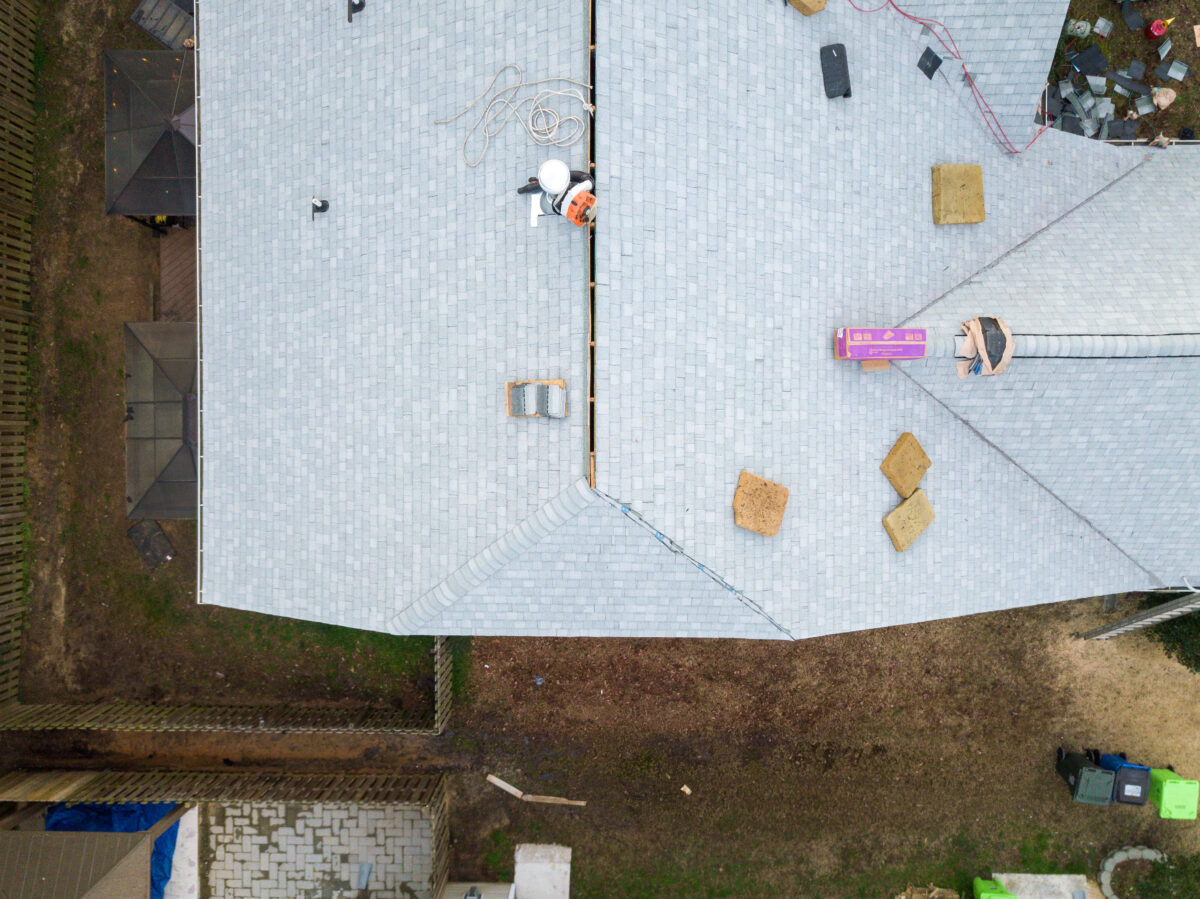
Ridge vents take direct exposure to weather at the peak of the roof — the most exposed point on the structure. After significant wind events, ice storms, or nor’easters, the ridge vent and the ridge cap shingles covering it are among the components most likely to have been damaged, lifted, or displaced. A properly ventilated attic depends on this topmost assembly remaining fully intact.
- Ridge cap shingle condition: Ridge cap shingles installed over a ridge vent protect it from weather infiltration. Lifted, cracked, or missing cap shingles expose the vent membrane to direct weather and can allow rain, ice, or debris into the attic space.
- Vent body integrity: The ridge vent material itself, whether plastic, aluminum, or rolled mesh, can be deformed by impact or sustained wind. A deformed vent that no longer sits flush with the roof deck creates gaps that admit weather rather than exhausting attic air.
6. Have the Full Ventilation System Professionally Assessed
Ridge vent performance depends on the entire system, not just the vent itself. Soffit condition, insulation placement, attic air sealing, and roof geometry all interact to determine whether the system actually moves air the way it should. A professional assessment by an experienced roofing contractor covers all of these factors and gives you an accurate picture of what your attic is actually doing.
- Ventilation calculation: A licensed contractor can calculate the net free area of your current intake and exhaust vents against the total attic floor area and confirm whether the system meets the minimum ratio recommended by building codes and shingle manufacturers.
- Comprehensive inspection value: A ventilation assessment combined with a full roof inspection documents the condition of the ridge vent, cap shingles, soffit vents, and attic interior in a single visit, giving you the information needed to address any deficiencies before they affect the roof’s lifespan or your energy costs.
Common FAQs About Ridge Vents

Homeowners considering ridge vent installation or troubleshooting an existing system tend to ask a consistent set of questions. Here are direct answers to what comes up most often.
How do I know if my ridge vent is working?
The simplest field check is to hold your hand near a soffit vent on a warm day. If you feel air moving outward, the system is pulling outside air in at the eaves and exhausting it at the ridge — which means airflow is happening. Inside the attic on a hot day, a properly ventilated space should feel noticeably cooler near the ridge than it would in a sealed attic. An experienced contractor can confirm system performance more precisely during an inspection.
Can a ridge vent leak?
Yes, if it is improperly installed or damaged. A ridge vent that is not seated correctly against the roof deck, that has cracked or missing cap shingles, or that has been deformed by impact can allow water infiltration at the ridge. This is one of the reasons ridge vent installation should be performed by a licensed roofing contractor and inspected periodically — the ridge is the highest point on the roof and one of the more consequential places for water to enter.
Do ridge vents require maintenance?
Ridge vents require periodic inspection rather than regular maintenance. Checking the cap shingles covering the vent, confirming the vent body is intact and seated properly, and verifying that neither end of the vent has been obstructed by debris or animal activity is sufficient for most homes. Including the ridge vent in an annual roof inspection covers these points without requiring a separate visit.
Is a ridge vent better than a power attic ventilator?
For most residential applications, a properly balanced ridge vent and soffit system outperforms a power attic ventilator because it operates continuously without energy cost, has no mechanical components to fail, and does not risk depressurizing the attic in ways that can pull conditioned air from the living space. Turbine vents offer a middle ground — wind-powered and passive — but deliver inconsistent attic ventilation depending on local wind conditions. A complete ventilation system built around a ridge vent and paired intake vents is the most reliable long-term solution for most homes on the North Shore.
Caesar’s Roofing: Getting Your Ventilation Right the First Time
A ridge vent is a simple component with a significant job, and the difference between a system that works and one that does not often comes down to installation details and system balance that are invisible from the outside. Caesar’s Roofing has been serving homeowners across the North Shore and Greater Boston for over 50 years. When we inspect a roof, we assess the full ventilation system — not just the ridge vent but the soffit vents, attic interior, and insulation placement — because all of these components determine whether the system actually performs.
Schedule your free inspection today and find out whether your attic ventilation is working the way it should.