
Roofing
Roofing Scams Alerts (9 Red Flags Homeowners Must Know)
Every year, thousands of homeowners across the country lose money to fraudulent contractors who target them after storms, show up uninvited, and disappear once they have collected a deposit. Roofing insurance scams and deposit fraud are among the most common roofing scams reported to consumer protection agencies each year, and the roofing industry sees a notable spike in these incidents after major weather events. Knowing how to spot roofing scams before you sign anything is one of the most practical skills a homeowner can develop. Their tactics follow predictable patterns and once you know what to look for, they are not difficult to recognize. Whether you need a repair or a full replacement, knowing how legitimate residential roofing services operate makes the contrast obvious.
Here’s what we’ll cover:
- How roofing scams typically work
- 9 red flags homeowners must know
- What to do if you suspect a scam
- How to find and verify a trustworthy roofing contractor
- Frequently asked questions about roofing scams
- Why Caesar’s Roofing is a contractor you can verify
How Roofing Scams Typically Work
Most roofing scams follow one of two scripts. In the first, someone knocks on your door after a storm, claims they were working on a neighbor’s roof, and offers a free inspection or a deal on leftover materials. In the second, a contractor bids extremely low on a project, collects a large upfront deposit, and either disappears or delivers shoddy work that fails within a season.
According to the Better Business Bureau, roofing scams become significantly more common after major storms, with BBB Scam Tracker regularly receiving reports of fraudulent free roof inspections where inspectors fabricate damage to justify unnecessary work. The North Shore of Massachusetts sees this pattern every time a nor’easter or hail event moves through the region, and the speed with which storm chasers arrive can catch unprepared homeowners off guard.
We’re proud to serve home and business owners in Hamilton, MA, and nearby communities with residential roofing services and more.
Why Homeowners Are Vulnerable After Storms
Urgency is the scammer’s most effective tool. A homeowner who has just experienced a storm is worried, distracted, and motivated to get the problem solved quickly. Fraudulent contractors exploit that state deliberately they show up at the right moment with a confident pitch and pressure the homeowner to make a decision before getting other opinions. Understanding this dynamic is the first step toward resisting it.
9 Red Flags Homeowners Must Know
These nine warning signs appear consistently in the most common roofing scams reported across the country. Encountering one of them does not guarantee fraud, but encountering several together should stop the process entirely until you have verified the contractor independently. Reputable roofing companies make this verification easy — they expect it and welcome it.
1. They Showed Up Uninvited After a Storm
A contractor who appears at your door unsolicited immediately following a storm is the defining characteristic of a storm chaser operation. Door to door sales tactics are one of the clearest signs of dishonest contractors working an area rather than a reputable local business responding to calls. Learning to avoid roofing scams starts with recognizing this pattern before anyone sets foot on your property.
- Out-of-state plates: Vehicles with license plates from other states are a common indicator of contractors who follow storms from region to region rather than maintaining a local business presence.
- Urgency pressure: Scammers frequently claim that roof damage from severe weather must be addressed within hours or days to prevent further deterioration. Legitimate contractors give you time to research and decide.
2. They Offer a Free Inspection With Immediate Pressure to Sign
A genuine roof inspection is a service a reputable contractor offers with no strings attached. A scam version is a foot in the door the inspector arrives planning to find damage whether it exists or not, and uses what they claim to find as immediate leverage to secure a signed contract.

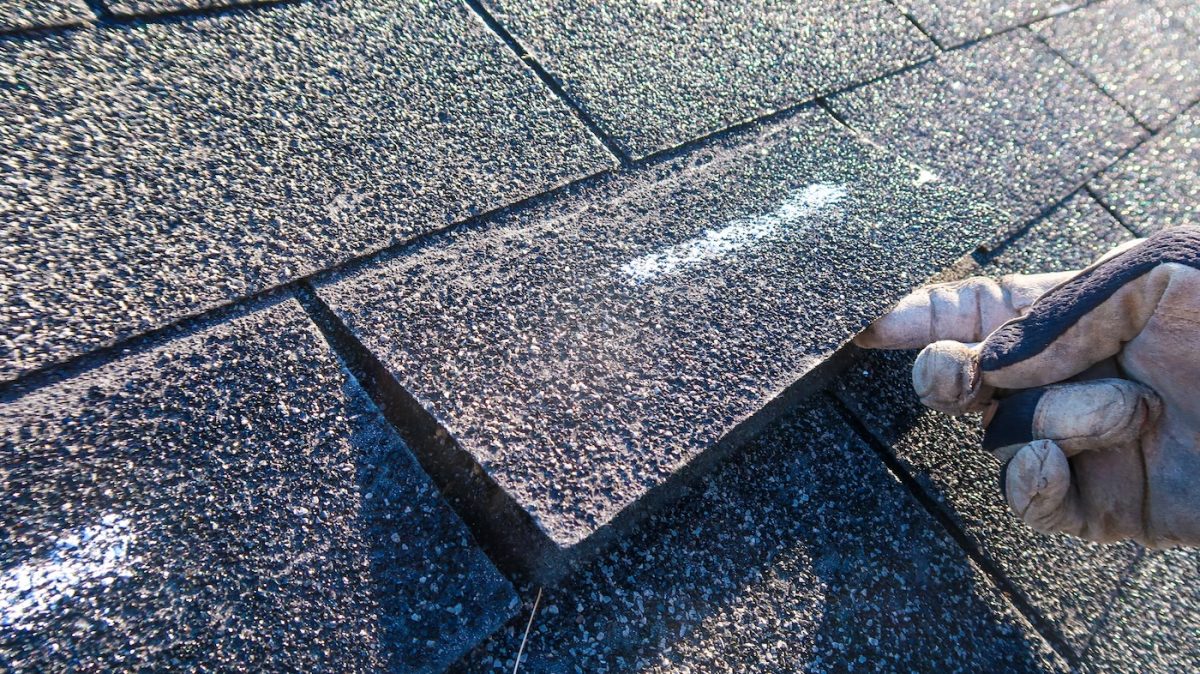
- Fabricated damage: The BBB has documented cases where fraudulent inspectors tear off shingles during the inspection to create damage they can point to as justification for emergency repairs. Watch what anyone on your roof is doing.
- On-the-spot contract: A legitimate contractor does not expect you to sign a contract at the end of an inspection visit. Any contractor who brings paperwork to an inspection and pressures you to sign before leaving is not operating honestly.
3. They Cannot Provide Proof of Licensing and Insurance
In Massachusetts, professional roofing contractors are required to hold a valid Construction Supervisor License. Any contractor who cannot immediately provide their license number and current insurance certificates, including liability insurance and workers’ compensation, has no business being on your roof.
- License verification: Massachusetts CSL numbers are searchable through the state’s online licensing portal. A reputable roofing contractor encourages you to verify their license. A scammer gives vague answers or deflects.
- Insurance certificates: Request liability insurance and workers compensation insurance certificates before any work begins. If a worker is injured on your property and the contractor carries no workers’ compensation, you may be held liable under Massachusetts law.
4. They Ask for a Large Upfront Payment
Requesting 50 percent or more of the total project cost before any materials are ordered or work begins is one of the most consistent warning signs of a contractor who does not intend to complete the job as described. Legitimate roofing companies do not need full payment upfront they have supplier relationships and operating capital that allow them to begin work without it.
- Reasonable deposit range: A fair deposit for a residential roofing project is 10 to 30 percent of the total. Anything above that should prompt additional questions and verification before any money changes hands.
- Payment method red flags: Requests for cash, wire transfer, or gift card payment are non-negotiable warning signs. These payment methods offer no recourse if the contractor disappears or fails to complete the work.
5. Their Estimate Is Dramatically Lower Than Others
A bid that comes in significantly below every other estimate is not a bargain it is a signal. Either the contractor has omitted scope items that competitors included, plans to use inferior materials, or is pricing to win the job with no intention of delivering what was described.
- Scope comparison: Ask each contractor to break down their estimate by line item, whether for a roof repair, a full roof replacement, or a new roof entirely. A low bid that excludes tear-off, disposal, underlayment replacement, or permit fees is not actually lower — those costs will surface later as add-ons or simply not be done.
- Material substitution risk: Some fraudulent contractors bid honestly but deliver poor quality work by substituting a cheaper shingle brand or grade without disclosure. A written contract specifying the exact material by brand, product line, and color is the only protection against this.
6. They Pressure You to File an Insurance Claim
A roofing contractor who encourages you to file an insurance claim for storm damage you were not aware of, or who offers to handle your insurance paperwork and deal with the insurance adjuster on your behalf entirely, is operating in territory that raises serious legal and ethical concerns. Roofing insurance scams frequently involve contractors offering to waive or cover your insurance deductible as an incentive to sign quickly. In Massachusetts and most other states, it is illegal for contractors to waive deductibles or offer to bill only the insurance company for the full replacement cost.
- Assignment of benefits fraud: Some scammers ask homeowners to sign documents that assign the insurance payment directly to the contractor, removing the homeowner from the settlement process entirely. Never sign an Assignment of Benefits without reviewing it with your insurance agent or an attorney.
- Inflated claims: Dishonest contractors sometimes commit insurance fraud by filing inflated claims on behalf of homeowners for roof damage that is exaggerated or fabricated. The insurance coverage dispute that follows can cost the homeowner far more than the original problem would have.
7. They Have No Local Presence or Verifiable Address
Local roofers with an established presence in the Greater Boston or North Shore area have a physical business address, a local phone number, an established web presence, and verifiable reviews. A contractor who provides only a cell phone number and a P.O. box has no fixed accountability in your community.
- Google search verification: Search the company name, the contractor’s personal name, and the phone number provided. Scam operations often have no online presence, or their web presence was created very recently.
- BBB and review platforms: Check the company on BBB.org, Google, and Yelp. Look not just at the rating but at the volume and age of reviews. A company with three reviews posted within the past two weeks is not an established operation.
8. The Contract Is Vague or Verbal
Any roofing contractor who proceeds with roofing work based on a verbal agreement or provides a contract that lacks specific material specifications, a defined scope of work, and a clear payment schedule is either disorganized or deliberately leaving themselves room to charge for things you did not agree to.
- Essential contract elements: The contract should identify the exact materials being installed by brand and product line, the complete scope of work including tear-off and disposal, the payment schedule tied to milestones, the project start and completion dates, and the warranty terms for both materials and workmanship.
- Change order process: Any changes to the original scope during the project should require a written change order that you approve before the additional work proceeds. Verbal additions that appear on the final invoice without prior written agreement are a standard tactic in contractor fraud.
9. They Disappear After Taking a Deposit
If a contractor collects a deposit and then becomes difficult to reach, delays starting the project with repeated excuses, or simply does not return, you are dealing with deposit fraud. This is one of the most common forms of contractor scam and one of the hardest to recover from without police involvement.
- Before paying a deposit: Verify the contractor’s license and insurance, confirm the physical business address, check online reviews, and have a signed contract in hand before any money changes hands.
- Reporting options: If a contractor takes your deposit and disappears, report the incident to the Massachusetts Attorney General’s Office, the BBB Scam Tracker, and your local police department. Documenting everything from the initial contact through payment improves the chances of recovery.
What To Do If You Suspect a Scam
If a contractor is already at your door and something feels wrong, you have every right to end the interaction. You are not obligated to let anyone on your roof, to sign anything, or to make any payment on the spot. Here is a practical response sequence:

- Slow down: Tell the contractor you need time to research and get additional quotes before making any decisions. A reliable roofer and trustworthy roofer accepts this without pressure — any contractor who pushes back is telling you something important.
- Do not pay cash: If you have already agreed to work but have not yet paid, use a credit card if at all possible. Credit card chargebacks offer a layer of consumer protection that cash and wire transfers do not.
- Document everything: Save the contractor’s business card, take a photo of their vehicle and license plate, and keep copies of any documents they provided.
- Get your roof replaced correctly: Once you have identified and removed a bad actor from the process, take the time to vet a legitimate contractor properly before proceeding. The roof replaced by a verified, licensed company is the only outcome worth pursuing.
Common FAQs About Roofing Scams
Homeowners who have encountered suspicious contractors tend to ask the same set of questions. Here are direct answers to what comes up most often.
How do I verify a roofing contractor in Massachusetts?
Start with the state’s online licensing portal managed by the Office of Consumer Affairs and Business Regulation. Search by contractor name or license number to confirm that a valid Construction Supervisor License is active. Then check BBB.org for complaint history, search Google for reviews, and ask the contractor for at least two references from jobs completed in the past year. Professional roofing contractors pass all of these checks without hesitation and provide documentation proactively rather than waiting to be asked.
Is it always a scam if someone knocks on my door after a storm?
Not necessarily but it always warrants a higher level of scrutiny. Some local contractors do reach out to neighborhoods they serve after significant weather events. The difference is that a legitimate local contractor can provide a verifiable business address, a local phone number, a state license number, and insurance certificates without hesitation. If any of those are missing or vague, do not proceed.
What should I do if a contractor damaged my roof during an inspection?
Document the damage immediately with photographs, do not make any payment, and do not sign anything. Contact your homeowner’s insurance company to report the incident, and file a complaint with the Massachusetts Attorney General’s Office and the BBB. If the contractor represented themselves as being from a legitimate company, contact that company directly to report the impersonation.
How can I tell if a roofing estimate is legitimate?
A legitimate estimate is written, itemized, and provided without pressure to sign immediately. It identifies the specific materials being used by brand and product name, breaks out labor and material costs separately, includes the permit cost, and specifies the warranty terms. If the estimate is a single number on a business card or a vague one-page document with no material specifications, it is not a reliable basis for a roofing contract.
Caesar’s Roofing: A Contractor You Can Verify
Everything described in this blog as a warning sign is the opposite of how Caesar’s Roofing operates. We are fully licensed and insured in Massachusetts, we have a physical business address on the North Shore, and we have been serving homeowners in the region for over 50 years. In a roofing industry where fraud is a real and documented risk, our track record and verifiable credentials set us apart. We provide itemized written proposals with no pressure to sign on the spot, our reviews are real, our license is verifiable, and our crew is our own.
Schedule your free inspection today and experience what working with a contractor you can actually trust looks like.